
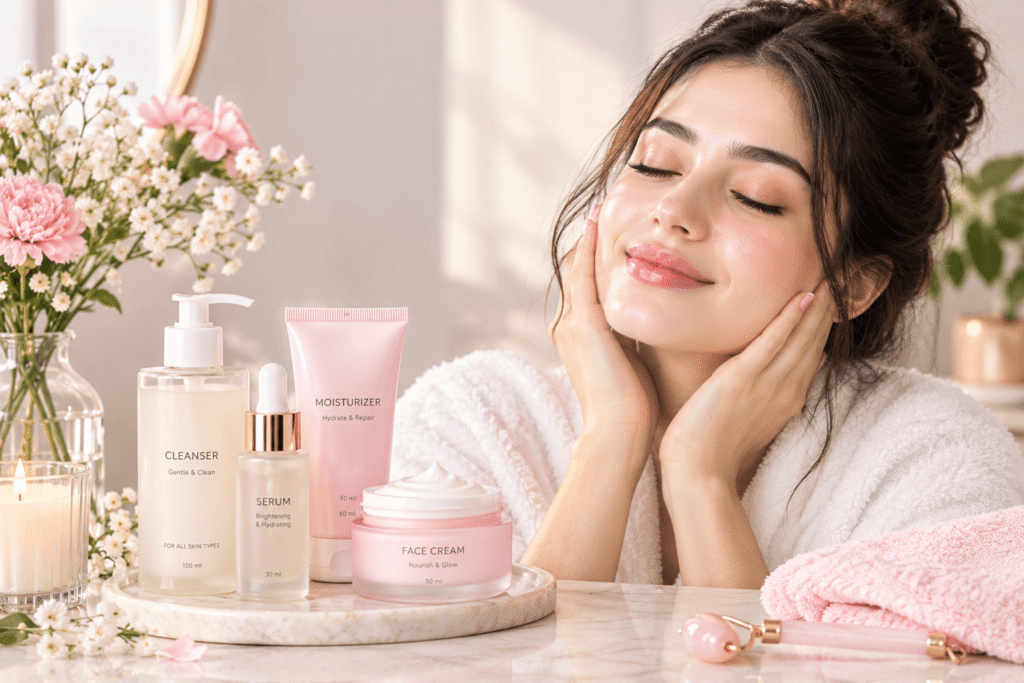
The Ultimate Daily Skincare Routine for Healthy, Glowing Skin
Healthy, glowing skin does not require a complicated 10-step routine. A good daily skincare routine starts with a few simple habits: cleansing gently, moisturizing regularly, treating specific concerns when needed, and protecting your skin from the sun.
Dermatologists generally recommend keeping skincare simple and consistent rather than constantly adding new products. Your routine can also change depending on whether your skin is dry, oily, combination, sensitive, or acne-prone.
In this guide, you will learn what a basic daily skincare routine should look like, which steps belong in the morning and at night, how to choose products for your skin type, and which common mistakes are worth avoiding.
Is a Basic Daily Skincare Routine?
Your skin is exposed to dust, pollution, makeup, sunlight, and other environmental factors every day. Without proper care, this can lead to dryness, clogged pores, dullness, and breakouts.
A daily routine helps remove impurities, maintain hydration, support the skin barrier, and protect your skin from sun damage. The key is consistency rather than using too many products.

Morning Skincare Routine
Your morning routine should focus on gently cleansing the skin, maintaining hydration, addressing specific concerns, and protecting your skin from the sun.
1.Cleanse Your Skin Gently
Start with a gentle cleanser suited to your skin type. Use lukewarm water and your fingertips instead of scrubbing your face aggressively.
Cleansing helps remove excess oil, dirt, and other buildup. However, washing too frequently or using a harsh cleanser can irritate the skin.
People with dry or sensitive skin may not need to cleanse as frequently as someone with very oily skin. Pay attention to how your skin feels after cleansing.
2. Apply a Treatment or Serum If Needed
Serums and treatment products are optional. They can be useful when you have a specific concern, such as acne, uneven-looking skin, or dryness.
For acne-prone skin, ingredients such as salicylic acid, benzoyl peroxide, or adapalene may be useful depending on the type and severity of acne.
Do not introduce several strong active ingredients at the same time. Start gradually and give your skin time to adjust.
3. Use Moisturizer
Moisturizer helps keep your skin hydrated and supports the skin barrier. Even oily skin needs moisture.
If your skin is oily, a lightweight moisturizer may feel more comfortable. For dry skin, a richer moisturizing formula may be preferable.
4. Apply Broad-Spectrum Sunscreen
Sunscreen is one of the most important parts of a daytime skincare routine.
Choose a broad-spectrum sunscreen with SPF 30 or higher. Water-resistant formulas can be particularly useful when you will be sweating or spending time around water.
Apply sunscreen to exposed skin before going outdoors and reapply according to the product directions. When spending extended time outdoors, sunscreen generally needs to be reapplied at least every two hours and after swimming or heavy sweating.

Nighttime Skincare Routine
Nighttime routine is mainly about removing the day’s buildup, applying any necessary treatment, and keeping your skin moisturized.
1. Remove Makeup and Sunscreen
If you wear makeup or sunscreen, remove it before cleansing.
Leaving makeup or accumulated products on your skin overnight can contribute to clogged pores and irritation.
2. Cleanse Your Face
Use a gentle cleanser to remove remaining makeup, sunscreen, oil, and dirt.
Avoid aggressive scrubbing. Your face does not need to feel extremely tight or “squeaky clean” after washing.
3. Apply Your Treatment
If you use a treatment product, apply it according to its instructions.
For acne-prone skin, salicylic acid can help unclog pores, while benzoyl peroxide can help reduce acne-causing bacteria. Adapalene is another commonly used acne treatment that helps prevent clogged pores.
If you are using an active ingredient for the first time, introduce it gradually. Irritation is more likely when multiple active products are used together.
4. Finish With Moisturizer
Finish your nighttime routine with a moisturizer that suits your skin.
For dry skin, creams and ointments can provide more moisture. For oily or acne-prone skin, a lightweight non-comedogenic moisturizer may be more comfortable.
Daily Skincare Routine for Different Skin Types
Dry Skin
Dry skin usually benefits from gentle cleansing and regular moisturizing.
Look for fragrance-free products and consider creams or ointments if your skin feels very dry. Applying moisturizer while the skin is slightly damp can help retain moisture.
Oily Skin
Oily skin still needs hydration.
Choose a gentle cleanser and lightweight, non-comedogenic moisturizer. Avoid repeatedly washing your face simply to remove oil, as overly harsh cleansing can irritate the skin.
Combination Skin
Combination skin may be oily around the forehead, nose, and chin while feeling drier on other areas of the face.
Use gentle products and adjust the amount or texture of moisturizer according to what different areas of your skin need.
Sensitive Skin
If your skin easily becomes red, itchy, burning, or irritated, keep your routine simple.
Fragrance-free products may be a better choice for sensitive skin. When trying a new product, consider testing it on a small area first rather than immediately applying it to your entire face.

Do You Need to Exfoliate Every Day?
No. Daily exfoliation is not necessary for most people.
Over-exfoliating can cause irritation and make your skin feel dry, sensitive, or uncomfortable. Instead of exfoliating every day, choose a product and frequency that your skin can tolerate.
Remember that some active ingredients, such as salicylic acid, already have exfoliating and pore-clearing properties. Adding several exfoliating products may therefore be unnecessary.
What About Acne-Prone Skin?
If you regularly experience pimples, blackheads, or whiteheads, your routine may need a targeted acne treatment.
Common acne-fighting ingredients include:
- Salicylic acid – helps unclog pores.
- Benzoyl peroxide – helps fight acne-causing bacteria.
- Adapalene – helps prevent clogged pores and treat acne.
Do not expect overnight results. Acne treatments can take several weeks to show noticeable improvement.
If you have deep, painful acne, frequent cysts, significant scarring, or acne that does not improve with basic care, a dermatologist can help determine the most appropriate treatment.
How Long Does It Take to See Results?
Skincare results vary depending on the product, skin concern, and individual skin.
Some products can immediately make the skin feel more hydrated or comfortable, while acne treatments generally require more time.
For example, the American Academy of Dermatology notes that some acne treatments may take around 4 to 8 weeks to show improvement.
Consistency is more useful than changing products every few days.
Common Daily Skincare Mistakes
Even a good routine can cause problems when it is overcomplicated.
Avoid these common mistakes:
- Washing your face excessively
- Scrubbing the skin aggressively
- Using too many active ingredients at once
- Skipping moisturizer because your skin is oily
- Forgetting sunscreen
- Changing products too frequently
- Picking or squeezing pimples
- Using products simply because they are trending
- Assuming expensive products are automatically better
Your skin does not need to follow every trend on social media. Start with the basics and add products according to an actual skin concern.
How to Build Your Simple Daily Routine
Morning
Cleanser → Treatment/Serum if needed → Moisturizer → Broad-Spectrum SPF 30+ Sunscreen
Night
Remove Makeup/Sunscreen → Cleanser → Treatment if needed → Moisturizer
This simple structure is enough for many people. Additional products can be added when there is a specific reason to use them.
A Simple Weekly Skincare Approach
Your daily routine should remain the foundation of your skincare.
If your skin tolerates exfoliation, you may occasionally add an exfoliating product according to its instructions. Avoid combining several exfoliating or active products simply because they promise faster results.
If your skin becomes irritated, simplify your routine and allow your skin time to recover.
How to Choose Better Skincare Products
When shopping for skincare, focus on your skin type and specific concerns rather than attractive packaging or viral trends.
Look for:
- Products suitable for your skin type
- Non-comedogenic products if you are prone to clogged pores
- Fragrance-free options if your skin is sensitive
- Clearly listed ingredients
- Sunscreen with broad-spectrum SPF 30 or higher
- Products that address your actual skin concern
You do not need to buy an entire product line from one brand. Different products can serve different purposes.
When Should You See a Dermatologist?
A skincare routine can support everyday skin health, but it cannot replace professional medical care when there is an ongoing skin problem.
Consider seeing a dermatologist if you experience:
- Deep or painful acne
- Persistent or worsening breakouts
- Significant acne scarring
- Severe irritation or allergic reactions
- A skin problem that does not improve
- Sudden or unexplained changes in your skin
A dermatologist can help identify the underlying problem and recommend appropriate treatment.
Final Thoughts
A healthy-looking complexion is not about having the longest skincare routine. It is about understanding your skin and consistently giving it the care it needs.
Start with the essentials: cleanse gently, moisturize, protect your skin from the sun, and use targeted treatments when appropriate.
Once you have a simple routine that works for you, there is no need to constantly add new products. Consistency, patience, and choosing products based on your actual skin needs are more valuable than chasing every new skincare trend.